
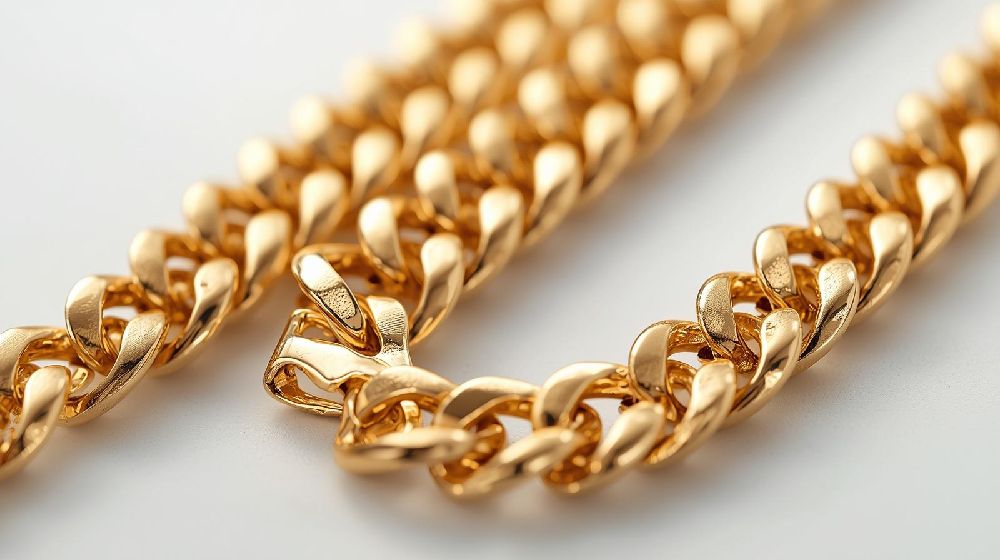
 In the world of gold-filled jewelry manufacturing, durability is not determined by appearance alone. One of the most critical technical factors influencing long-term performance is the thickness of the gold layer. At DVN Jewelry, gold-layer thickness is not treated as a marketing term — it is a carefully controlled engineering parameter that directly affects wear resistance, shine retention, and customer satisfaction.
Understanding how thickness impacts durability helps retailers, wholesalers, and private labels make informed sourcing decisions.
What Is Gold-Filled Jewelry?
Gold-filled jewelry consists of a thick layer of real gold mechanically bonded to a base metal core under high pressure and heat. Unlike standard gold plating, the gold layer in gold-filled products is significantly thicker, making it more resistant to tarnish, fading, and peeling.
However, not all gold-filled products are equal — the durability largely depends on how thick and uniformly applied the gold layer is.
1. Thicker Gold Layer = Longer Wear Life
The most direct impact of gold thickness is longevity.
A thicker gold layer provides:
-
Greater resistance to surface wear
-
Improved scratch tolerance
-
Better color retention over time
-
Reduced exposure of base metal
At DVN Jewelry, thickness control ensures that the gold layer can withstand daily friction, skin contact, and environmental exposure without premature fading.
2. Improved Tarnish Resistance
Gold itself does not tarnish easily, but when the gold layer is too thin, microscopic wear can expose the underlying alloy. This can lead to discoloration.
With optimized thickness:
-
The gold barrier remains intact longer
-
Moisture penetration is minimized
-
Skin reaction risks are reduced
-
Shine is preserved for extended periods
This is especially important in high-contact products such as bangles, rings, and chains.
3. Structural Support & Bonding Strength
Thickness also affects how well the gold layer bonds with the base metal. A properly engineered layer ensures:
-
Strong mechanical adhesion
-
Reduced peeling or flaking
-
Enhanced impact resistance
-
Better flexibility without cracking
DVN Jewelry focuses on uniform bonding pressure during manufacturing to maintain consistent thickness across the entire surface — including edges and curved areas where thinning commonly occurs in low-quality production.
4. Edge & Stress Point Protection
Jewelry experiences the most stress at:
-
Edges
-
Hinges
-
Lock mechanisms
-
Curved inner surfaces
If gold thickness is inconsistent, these high-friction areas wear out first.
Advanced thickness monitoring at DVN ensures:
-
Reinforced coverage at stress points
-
Balanced metal distribution
-
Enhanced durability in structural designs
This is particularly crucial for lock bangles and structured rings manufactured for wholesale markets.
5. Shine Retention & Surface Finish Longevity
A thicker gold layer allows:
-
Deeper polishing without risk
-
Better gloss retention
-
Reduced dullness over time
Since finishing involves surface refinement, adequate thickness ensures that polishing processes do not compromise durability.
DVN Jewelry integrates finishing precision with thickness control to achieve long-lasting brilliance.
6. Cost vs Durability Balance
While increasing gold thickness enhances durability, it must be balanced with weight and cost efficiency. Excess thickness can increase manufacturing costs without proportional benefit.
DVN Jewelry engineers its gold-filled products with:
-
Optimized thickness standards
-
Material efficiency planning
-
Consistent quality scaling for bulk production
This approach provides strong durability while maintaining competitive wholesale pricing.
7. Quality Control & Thickness Verification
Professional manufacturers do not rely on estimation. Thickness must be measured and verified.
DVN Jewelry implements:
-
Thickness monitoring systems
-
Surface inspection protocols
-
Structural integrity testing
-
Consistency checks in batch production
This ensures every piece meets defined durability standards before reaching retailers.
Why Thickness Defines Brand Reputation
For retailers and private labels, product durability directly affects:
-
Customer satisfaction
-
Return rates
-
Online reviews
-
Long-term brand credibility
When gold thickness is properly engineered, jewelry performs better in real-world conditions — maintaining shine, resisting wear, and retaining its premium look.
Conclusion
The thickness of the gold layer is one of the most important technical factors determining durability in gold-filled jewelry. It influences wear resistance, tarnish protection, bonding strength, and overall product lifespan.
At DVN Jewelry, thickness is not accidental — it is precisely engineered and quality-controlled to ensure long-lasting performance.
In gold-filled manufacturing, durability begins beneath the surface — and thickness makes all the difference.